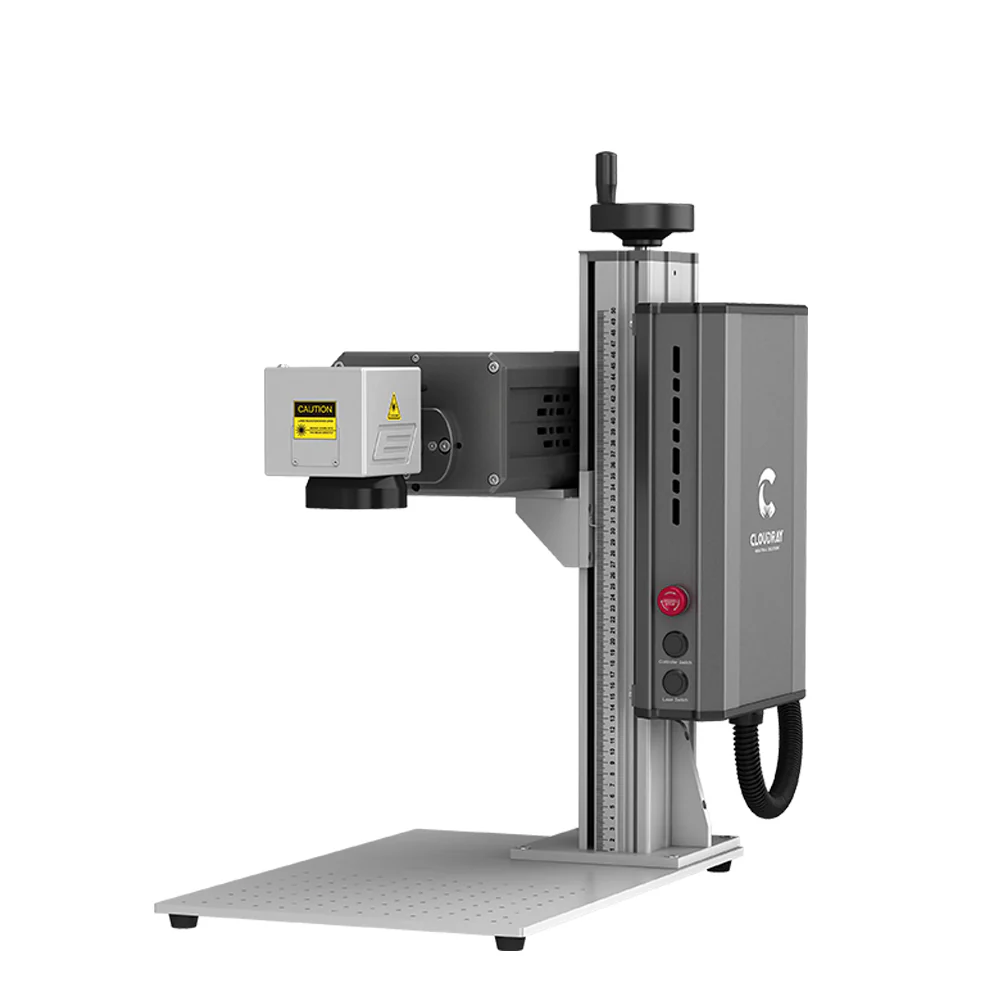
Laser cleaning machines are becoming a practical choice for rust removal, oxide removal, surface prep, and equipment maintenance.
They are not popular only because they are new.
They are popular because they offer a cleaner, more controlled process.
Compared with sandblasting or chemical cleaning, laser cleaning is more precise.
It uses no abrasive media.
It uses no chemical solvents.
It also gives users more control over the final surface condition.
For many users, that matters more than raw cleaning speed.
What Is a Laser Cleaning Machine?
A laser cleaning machine uses a focused laser beam to remove unwanted material from a surface.
That unwanted material may include:
- rust
- oxide layers
- oil residue
- coatings
- paint
- surface contamination
The goal is simple.
Remove the contamination.
Protect the base material as much as possible.
That is why laser cleaning is often seen as more than just cleaning.
It is also a controlled surface treatment process.
How Does Laser Cleaning Work?
Laser cleaning works because the contamination layer and the base material do not react to laser energy in the same way.
The contamination absorbs energy first.
It then breaks away, vaporizes, or lifts from the surface.
The base material is affected less.
That is what makes the process more controlled.
In simple terms, laser cleaning is valuable because it does three things well:
- focuses energy on the unwanted layer
- reduces unnecessary impact on the substrate
- improves process control
What Is Laser Cleaning Used For?
Laser cleaning is used in many real work environments.
Rust removal
This is one of the most common uses.
It is especially useful when users want better control over the cleaned area.
Oxide removal
Oxide layers often need to be removed before welding, finishing, or further processing.
Laser cleaning helps create a more consistent surface.
Oil and residue removal
It can be used for maintenance, repair, and part refurbishment.
This is useful when surface contamination must be removed without aggressive abrasion.
Paint and coating removal
Laser cleaning can help with localized coating removal.
This is useful for rework, repair, and restoration.
Equipment maintenance and restoration
It is also used in workshops, repair environments, automotive restoration, and industrial maintenance.
Pulse vs. Continuous Laser Cleaning
There are two main categories of laser cleaning machines.
Pulsed laser cleaning
Pulsed laser cleaning is better known for precision and control.
It is usually the better choice when surface protection matters.
It is often preferred for:
- fine rust removal
- oxide cleaning
- localized coating removal
- jobs that require consistent results
Continuous laser cleaning
Continuous laser cleaning is usually associated with faster large-area processing.
It is more suited to rougher, heavier cleaning tasks.
It is often used when speed matters more than fine control.
Which one is better?
If the goal is cleaner process control, lower heat impact, and better surface protection, pulsed laser cleaning is usually the stronger choice.
Why Are More Users Replacing Sandblasting with Laser Cleaning?
Sandblasting is still common.
But many users now want more than just aggressive cleaning.
They want cleaner results.
They want more control.
They want a process that fits modern production and maintenance needs.
That is where laser cleaning stands out.
Better surface control
Sandblasting removes contamination through physical impact.
That can be effective.
But it can also affect the base surface more aggressively.
Laser cleaning is different.
It focuses more on removing the unwanted layer, not on broadly attacking the whole surface.
Higher precision
Sandblasting is better suited for rough, large-area cleaning.
Laser cleaning is better suited for targeted work and controlled surface treatment.
Cleaner operation
Laser cleaning does not rely on blasting media.
It does not create the same type of consumable waste flow.
That makes it more attractive for many modern work environments.
Better process consistency
In many applications, the real goal is not only to clean a part.
The real goal is to prepare the surface for the next step.
That may be welding, coating, repair, restoration, or inspection.
In those cases, consistency matters.
Laser cleaning often supports that better.
What Really Matters When Choosing a Laser Cleaning Machine?
Many buyers focus first on power and price.
That is understandable.
But those are not the only things that matter.
In long-term use, machine quality is often defined by stability.
A laser cleaning machine should not only clean.
It should clean consistently.
The most important factors usually include the following.
Beam consistency
Stable beam output helps deliver predictable cleaning results.
Without consistency, process control becomes difficult.
Galvo accuracy
Galvo performance affects scanning precision and repeatability.
That matters when users need controlled cleaning paths and reliable results.
Thermal management
A machine may perform well for a short demo.
That does not mean it will remain stable during long working sessions.
Good thermal management helps the machine stay consistent over time.
Overall system stability
Real performance comes from the full system working together.
That includes the laser source, galvo system, control system, and cooling design.
This is what separates a machine that feels precise from one that feels frustrating.
Why a 200W Handheld Pulsed Laser Cleaning Machine Is a Strong Balance Point
Once users move beyond basic specs, the next question is practical:
What configuration makes the most sense for real work?
For many users, a 200W handheld pulsed laser cleaning machine is a strong balance point.
It often gives enough capability for real cleaning work.
It still keeps the control advantages of pulsed cleaning.
It also fits a wide range of real-world tasks.
That balance matters.
Too little power may limit efficiency.
Too much machine may increase cost, complexity, and operating burden.
A 200W handheld pulsed system often sits in the middle.
That makes it attractive for users who want flexibility, control, and practical long-term value.
Recommended Direction: Cloudray 200W Handheld Pulsed Laser Cleaning Machine
If the goal is precise cleaning, flexible operation, and better long-term usability, the Cloudray 200W Handheld Pulsed Laser Cleaning Machine is a strong direction to consider.
It aligns well with the decision logic above.
It supports the kind of work many users actually do:
- rust removal
- oxide cleaning
- localized coating removal
- maintenance work
- repair work
- restoration tasks
It also fits users who need handheld flexibility rather than fixed-line operation.
Most importantly, it makes sense for buyers who care about controlled results, stable performance, and real usability over time.
That is why this type of machine is often easier to justify than simply choosing the biggest spec on paper.
Who Is This Type of Machine Best For?
A 200W handheld pulsed laser cleaning machine is especially relevant for users such as:
- small workshops
- maintenance teams
- repair professionals
- restoration users
- metalworking professionals
- buyers upgrading from rough cleaning methods
- users who want better control, not just more force
If the goal is not simply “more power,” but a better-fit tool for real work, this configuration deserves serious attention.
FAQ
Is laser cleaning good for rust removal?
Yes.
Rust removal is one of the most common laser cleaning applications.
Does laser cleaning damage the base material?
With the right machine and settings, laser cleaning is designed to reduce unnecessary impact on the substrate.
Why is pulsed laser cleaning often preferred?
Because it usually offers better control, lower heat impact, and more consistent fine cleaning results.
Why should buyers look beyond power?
Because real performance also depends on beam consistency, galvo accuracy, thermal management, and overall system stability.
What is a 200W handheld pulsed laser cleaning machine best for?
It is well suited for rust removal, oxide cleaning, localized surface treatment, maintenance, repair, and restoration work.
Final Thoughts
Laser cleaning is not replacing older methods just because it is newer.
It is growing because it gives users something many traditional methods do not:
more control,
more precision,
and a more stable surface treatment process.
When choosing a laser cleaning machine, the key question is not only how much power it has.
The better question is this:
Can it deliver stable, repeatable, controlled results over time?
That is why a 200W handheld pulsed laser cleaning machine is such a strong option for many buyers.
It offers a practical balance of control, flexibility, and real-world usability.